
This article is based on a panel discussion I had the privilege of joining, “The Leadership Paradox: Why Universities Struggle to Find and Develop Their Next Leaders,” hosted and moderated by Patricia Polischuk of TalentWise Collective. I was joined by Cheryl Foy and Pamela Cant, whose perspectives brought depth, candour, and practical insight to the conversation. While the article reflects my synthesis of the discussion, the ideas were shaped by the full panel, and credit is due to Patricia, Cheryl, and Pamela for their thoughtful contributions.
The Post-Secondary Leadership Paradox
“Higher Education needs stronger leaders.”
It is a familiar refrain. Stronger presidents. Stronger provosts. Stronger vice-presidents. Stronger deans. Leaders with more courage, more vision, more financial discipline, more empathy, more political skill, more patience, more urgency, and more capacity to bring people along.
And, of course, strong leadership matters.
But there is another truth we do not talk about nearly enough: the job we are asking people to do has become increasingly difficult to describe, harder to perform, and, in many cases, much harder to sell.
Post-secondary institutions are facing financial pressure, political scrutiny, labour complexity, enrolment uncertainty, reputational risk, public hostility, and internal expectations that are often in tension with one another. The modern post-secondary leader is expected to be a strategist, diplomat, fundraiser, crisis communicator, labour negotiator, governance expert, public advocate, institutional steward, and emotional shock absorber.
And we wonder why fewer people are raising their hands.
The Role Has Changed. The System Has Not
The scope of senior post-secondary leadership has expanded dramatically over the past decade. Senior administrators are no longer leading within relatively stable institutional environments. They are navigating ambiguity, uncertainty, and public scrutiny while responding to constituencies that do not always agree on what the institution should do next.
These pressures have made the work both more consequential and more exposed. Leaders are asked to restructure units, revisit programs, manage protests, respond to geopolitical events, defend institutional values, and communicate through moments where silence, speech, action, and inaction may all be criticized. The decisions are rarely abstract. They affect livelihoods, student experience, institutional identity, and community trust.
Increasingly, the criticism is personal. Senior leaders may find themselves named, targeted, harassed, or doxxed online, while still being expected to remain calm, principled, and publicly accountable. It is no surprise that burnout has become a defining feature of the leadership conversation.
The paradox is this: post-secondary institutions need exceptional leadership at precisely the moment when the leadership proposition has become harder to fill.
Nobody Wants Their Final Role to Be Defined by Constraint
From a recruitment standpoint, this matters enormously.
Many candidates for senior post-secondary leadership are considering what may be their last major institutional role. They understand complexity and difficult decisions come with the territory, but few want their final chapter defined primarily by constraint, conflict, or contraction. Leaders generally want to build something and leave an institution better positioned for the future. They do not expect ease. But they do look for possibility.
When a role begins to look less like leadership and more like relentless crisis containment, the candidate pool changes. Some leaders stay where they are. Others wait for greater political or financial stability. Some look at the personal toll and conclude that the opportunity is not worth the cost.
This is not a failure of ambition. It is a rational response to an increasingly punishing environment.
The Pipeline Problem We Prefer Not to Name
Let’s be candid: post-secondary institutions are not especially good at developing successors at the most senior levels.
In higher education, senior administrative appointments are determined by formal processes, collegial expectations, community consultation, and institutional politics. Any senior administrator who is seen to be grooming a preferred successor may unintentionally undermine that person’s candidacy before the process even begins, as the candidate may be viewed less as a prepared leader and more as a continuation candidate assumed to represent more of the same.
This is why succession planning at the highest levels in higher education is often understood as preparing leaders for the sector. A provost or vice-president may develop several deans or associate vice-presidents capable of leading elsewhere. A president may mentor senior leaders who will eventually contribute at other institutions. The point is to strengthen leadership capacity across the system.
Seen this way, succession planning is not an affront to transparent process or institutional consultation. It is an investment in the future of post-secondary education. A high tide raises all boats, and institutions benefit when more leaders are prepared to take on complex roles, wherever they ultimately serve.
We Need to Teach Search Committees What They Are Hiring For
Search committees are often populated by thoughtful, committed people who care deeply about the institution. But many have never hired a senior administrator before, and many have limited visibility into what these roles actually require day to day. Their understanding of the role may be shaped by their own interactions with administration, which can be narrow, episodic, or coloured by frustration. That is not a criticism. It is a design problem.
Before assessing candidates, committees need to understand the role in practical terms. What does the leader do in a day, a week, a month, a year? What decisions sit with the office? What pressures are visible and invisible? How does the role affect students, faculty, staff, government, donors, unions, alumni, employers, community partners, and the board?
Without that grounding, committees can default to the criteria they know best. In academic leadership searches, this may mean over-weighting scholarly reputation, research record, disciplinary standing, or deep institutional familiarity, even when the role is fundamentally administrative, strategic, and institutional. These credentials are relevant, but they are not proxies for leadership readiness.
Committees can also focus too narrowly on the institution’s immediate anxieties. An institution may need someone who can address today’s financial realities, but what happens beyond that? What kind of leader will the institution need in three, four, or five years? The person best suited to stabilize the present may not be the same person best equipped to lead the next chapter. Hiring only for the problem directly in front of us risks neglecting the leadership the institution will need over the full term of the appointment.
That is why role clarity must happen at the beginning. The question is not simply who can respond to the current moment, but who has the judgment, temperament, and leadership capacity to carry the institution through what comes next.
Honesty Is Not a Recruiting Liability
Post-secondary institutions are understandably tempted to present themselves in the best possible light during recruitment. Every institution wants to communicate momentum, opportunity, and promise. But realism is not the enemy of recruitment. It is one of its most important tools.
Candidates need a clear and honest picture of the institution they are being asked to lead: the financial pressures, fragile relationships, delayed decisions, morale challenges, and unresolved tensions that will land on the new leader’s desk.
This kind of honesty does not scare away the right candidates. It helps identify them. Some leaders are drawn to institutions with a stable foundation and room to accelerate progress; others are energized by complexity, ambiguity, and repair. But no single source can provide a complete picture of an institution. Students, faculty, staff, unions, alumni, employers, community partners, and government each see the institution from a different vantage point. Consultation, when done well, is not merely procedural. It is diagnostic. It tells us where the institution is starting from, what the next leader will inherit, and what conditions will shape their ability to succeed.
Support Must Be Built In From the Start
Hiring the right leader is only the beginning. Post-secondary institutions also need to rethink how they support leaders once they arrive.
Too often, onboarding is treated as an administrative exercise: meetings, briefing notes, introductions, and then the new leader is simply expected to begin. But senior post-secondary roles require more intentional transition planning. New leaders need to understand not only the institution’s formal strategy and structures, but how power, trust, governance, labour relations, and unresolved tensions actually operate beneath the surface. Coaching, mentoring, and advisory support should be part of that infrastructure, not treated as remedial supports to be offered only after difficulty emerges.
Boards are part of that support system too, particularly for presidents. But it is important to remember that support and accountability are not opposites. Support does not mean deference, and accountability does not mean leaving leaders to absorb pressure alone. Boards are most helpful when they understand the distinctive governance environment of post-secondary institutions and ask difficult questions in ways that help leaders test assumptions, clarify trade-offs, and make better decisions. In that sense, challenge is not the opposite of support; it is one of the ways support is expressed.
The Sustainability Question: Is the Job Too Large?
Senior post-secondary leadership has become a role of constant extension. The work stretches across internal operations, external relationships, public accountability, and the emotional life of the institution. The demands expand, but the day does not. When senior roles depend on constant availability, extraordinary stamina, and the ability to absorb pressure without visible strain, institutions should not be surprised when talented people question whether the role is compatible with the kind of leadership, and the kind of life, they want to build.
The answer cannot be to ask leaders to work harder or become more resilient. Post-secondary institutions need to ask what can be distributed, delegated, or shared, and how executive teams can operate as true leadership teams rather than as structures organized around one overextended leader.
What Needs to Change
The leadership paradox will not be solved by better search processes alone. But search is one place where post-secondary institutions can begin to behave differently.
Institutions need to be clearer about what they are hiring for, more honest about the realities candidates will face, more intentional about developing future leaders, and more deliberate in supporting those who accept the call.
That means treating succession planning as sector stewardship, educating search committees before they assess candidates, naming the leadership capabilities that matter beyond academic or professional accomplishment, and using consultation to understand institutional reality rather than simply to satisfy process.
It also means providing realistic job previews, investing in onboarding and coaching, preparing boards for the distinctive pressures of post-secondary governance, and designing senior roles that are humanly sustainable.
None of this diminishes shared governance, collegial process, or community consultation. It strengthens them by ensuring that leadership decisions are grounded in a clearer understanding of the institution and the work ahead.
Preserving the Future of Post-Secondary Leadership
Post-secondary institutions are among the most important institutions in civic life. They create knowledge, educate citizens, prepare the workforce, challenge assumptions, preserve culture, advance research and innovation, and serve the public good. But they cannot fulfill that mission without people willing to lead them.
The warning signs are visible: the roles are harder to fill, the work is harder to sustain, the scrutiny is more intense, and the pipeline is thinner than it should be.
And yet, there is still reason for hope. Those who step into post-secondary leadership often do so because they believe deeply in these institutions. They are willing to navigate complexity, make difficult decisions, and serve. But willingness should not be mistaken for inexhaustibility.
If post-secondary institutions want courageous, visionary, principled leaders, they must build systems that make such leadership possible. The future of higher education will depend not only on who is willing to lead, but on whether our institutions are willing to change what leadership has become.
Alex Verdecchia
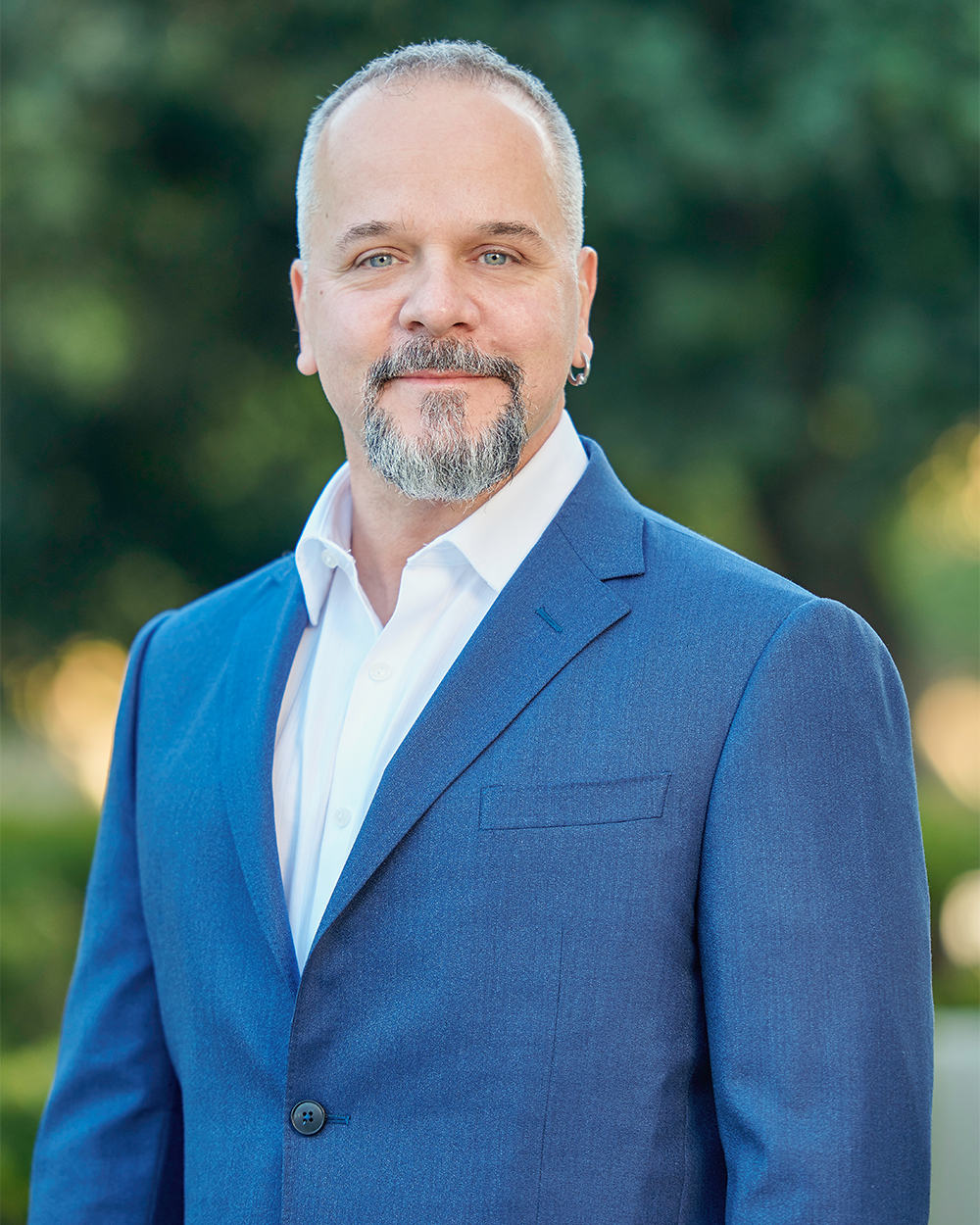
Alex serves as a Principal at McDermott + Bull Canada and is part of the firm’s Education Practice, based in Vancouver, BC. With over 20 years of experience in executive search, Alex is known for his successful collaborations with clients, sourcing top-tier talent across diverse industries and functions. His core areas of focus include post-secondary education, NPOs, healthcare, professional colleges, associations, and municipalities.