I spend a great deal of time talking with CEOs, boards, investors, and HR leaders about leadership transitions. Increasingly, those conversations begin well before there is a clearly defined position to fill. Companies know they have executives approaching retirement. They know certain capabilities will become more important. They may be navigating AI, entering new markets, restructuring a business, or responding to changing customer needs. They know they need to prepare for what is coming. What they don’t always know is what the answer looks like.
That gap, between knowing change is coming and knowing how to respond to it, is where many succession plans fall short. The traditional model assumes the job is fixed and the only open question is who will fill it. In today’s environment, that assumption is increasingly difficult to defend.
From Replacement Planning to Leadership Planning
Succession planning can no longer be replacement planning. The question shouldn’t be, “Who can replace this executive?” It should be, “What will this business need from its leadership next?”
The shift sounds subtle, but it changes the entire conversation. Consider a CFO who built a strong finance function for a company growing steadily through organic sales. If the company’s next chapter involves acquisitions, a capital raise, or an eventual exit, the right successor may bring a very different profile. A COO role designed around a single domestic footprint may need to evolve as operations expand internationally. A technology leader hired to maintain systems may need to be replaced by one who can lead an AI-driven transformation.
In each case, the answer may lead to a very different role. The next leader may need different capabilities. A position historically held at one level may need to move up or down. An internal successor may be the right answer, or the external market may reveal experiences and capabilities the organization hadn’t considered.
Be Precise About What Matters and Flexible About the Rest
Flexibility doesn’t mean lowering the bar. Organizations should be very clear about the outcomes a leader must deliver, the capabilities required, the challenges they must navigate, and the leadership attributes that matter.
There can be considerably more flexibility around title, level, location, reporting structure, timing, and whether the eventual solution is internal or external. In my experience, searches often stall when organizations anchor on requirements inherited from the previous incumbent: a specific title, a compensation band, a headquarters location, or a reporting line that made sense five years ago. Loosening those constraints tends to widen the pool of qualified leaders and surface candidates who would otherwise have been screened out before anyone had a conversation with them.
The goal is to be precise about what truly matters and open-minded about how the organization gets there.
Matching the Approach to the Moment
The same principle should apply to the executive search process itself. Not every developing leadership need should be forced immediately into a traditional search, and different situations call for different tools.
Sometimes an organization knows it has a leadership need but hasn’t fully defined the role. Role scoping can help clarify the mandate, level, structure, and success profile before anyone is approached, which reduces the risk of a search that restarts midstream because the target moved.
Sometimes the role is reasonably clear, but the organization isn’t ready to recruit. Market mapping can provide visibility into the external talent landscape and help pressure-test assumptions before going to market. It can also strengthen internal development plans by showing how internal candidates compare with external benchmarks and where the gaps lie.
And sometimes the mandate is clear and the organization is ready to hire. That is when a retained search makes sense.
These approaches are not mutually exclusive. Role scoping often informs a market map, and a market map often shapes the eventual search. What matters is choosing the approach that fits where the organization stands today, rather than defaulting to the one that fits where it hopes to be.
Flexibility Still Requires Decisions
There is, however, a line between flexibility and indecision. The purpose of creating options is to help organizations make better leadership decisions, not to postpone them indefinitely.
There should still be clear decision points. What are we trying to learn? What will cause us to move forward? When do we decide whether to develop internally, map the market, or recruit externally? A practical discipline is to attach an owner and a timeline to each stage: complete role scoping ahead of a board meeting, review market findings within a set window, and commit to a direction by a defined date. Without that structure, flexibility can quietly become drift, and drift tends to surface at the worst possible moment, when a key executive departs and the organization is forced to react rather than choose.
Planning for the Role You Will Need
The leadership role that exists today may not be the leadership role a company needs two years from now. Strong succession planning anticipates that reality.
In a rapidly changing environment, the strongest plan isn’t necessarily the one with every answer predetermined. It’s the one that gives an organization the insight, options, and flexibility to make the right leadership decision when the moment arrives.
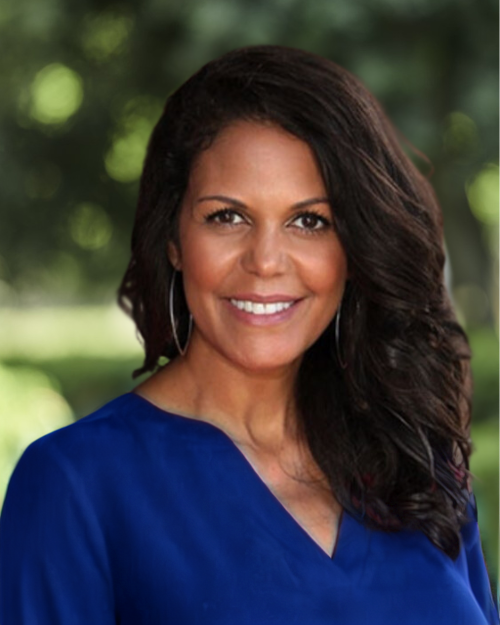
About the Author
Noelle Swan
Managing Director
Noelle serves as a Managing Director at McDermott + Bull and is part of the firm’s Technology Practice, based in New York, NY. She has over 20 years of experience in the talent acquisition industry, finding the right candidates to support her client’s needs for skill, experience, and culture fit. Her expertise spans across the broad spectrum of technology, with specific emphasis on information, communication and technology (ICT), networking, and cybersecurity.