
The leadership profile that built many of the most successful Consumer Markets companies over the last two decades is not the same one required for the environment ahead.
The businesses that outperform from here will not simply have the strongest brands, the most attractive categories, or the best products. They will have leadership teams capable of navigating increasing complexity while maintaining growth, operational discipline, and organizational resilience.
Over the last 18 months, I have heard a remarkably consistent message from CEOs, founders, operators, and private equity leaders across food and beverage, ingredients, beauty, personal care, household products, and consumer health:
“We are still growing, but the business has never been harder to run.”
That statement captures what I believe is the defining tension inside Consumer Markets today:
- Growth opportunities remain attractive
- Capital remains available
- Consumer demand continues to evolve and create new opportunities
Yet the difficulty of converting those opportunities into sustainable, profitable growth has increased dramatically.
The Environment has Changed
The numbers tell part of the story. According to Kroll, food and beverage M&A activity increased 20% year over year in Q1 2026, while BeautyMatter reported beauty and wellness transactions rising more than 40%. PwC found that global consumer deal value increased 41% in 2025 despite relatively flat transaction volume, suggesting investors are concentrating capital into fewer, higher-conviction opportunities rather than spreading it broadly. Meanwhile, Global Market Insights projects North America’s beauty and personal care market will reach approximately $155 billion in 2026, while the broader consumer healthcare market is expected to nearly double over the next decade.
Capital is not retreating. Growth is not disappearing. What has changed is the level of complexity required to capture it. Retailers are demanding sharper pricing, faster innovation cycles, greater forecasting accuracy, and improved service levels simultaneously. The rapid adoption of GLP-1 medications is beginning to reshape consumer purchasing behavior in ways many manufacturers are still working to understand. Artificial intelligence is moving from a technology discussion to an operational one, increasingly influencing forecasting, procurement, planning, and supply chain decision-making.
At the same time, private equity sponsors continue pushing for EBITDA expansion, procurement transformation, working capital optimization, and operational improvement on increasingly accelerated timelines. The strongest operators are responding not by chasing growth at any cost, but by simplifying complexity. They are sharpening portfolios, modernizing infrastructure, strengthening operating disciplines, and building organizations capable of moving faster without sacrificing execution.
Post Holdings’ resilience across center-store, refrigerated, foodservice, and ingredients categories reflects this approach. Chobani’s continued investment in manufacturing scale and vertical integration reflects it differently. The discussions between Ingredion and Tate & Lyle point to the same underlying reality: durable competitive advantage increasingly belongs to organizations that can execute consistently amid growing complexity.
The Leadership Implication
The implication is significant. Most organizations have spent the last several years investing heavily in technology, automation, analytics, procurement transformation, and operational efficiency. Far fewer have invested with the same rigor in evaluating whether their leadership teams are equipped for the environment those investments are creating. Yet leadership capability increasingly determines whether those investments generate results. This is where many organizations are beginning to rethink what leadership excellence actually looks like.
What the Environment Is Actually Demanding From Leaders
Functional expertise remains essential. It is no longer the differentiator. The organizations navigating this environment most effectively are led by executives who can connect strategy with execution, operations with culture, growth with discipline, and transformation with organizational resilience.
Leaders who can walk a manufacturing floor in the morning, participate in a board meeting in the afternoon, and still understand the human realities inside the organization they are leading. That profile is increasingly rare. It is also increasingly what boards, investors, founders, and executive teams are prioritizing when they think carefully about the leadership required for the next chapter.
One of the most interesting shifts I am observing in executive hiring conversations is that organizations are no longer hiring primarily for expertise. Five years ago, expertise often differentiated candidates. Today, expertise is increasingly assumed. The differentiator has become adaptability. The ability to learn quickly, integrate across functions, influence diverse stakeholders, make decisions with imperfect information, and lead through ambiguity has become as important as technical excellence itself.
Leadership conversations have become materially more sophisticated as a result. Organizations are no longer evaluating talent solely through the lens of functional competency. They are evaluating judgment, learning agility, integration capability, resilience, and the ability to perform under uncertainty. Not simply complexity that can be solved through better processes. But ambiguity that requires leadership. The pace of change has become too great for expertise alone to remain a sustainable competitive advantage.
Why This Matters to Me Personally
Consumer Markets has been my professional home throughout my career. I have had the privilege of advising CEOs, boards, founders, family-owned businesses, and private equity groups across the breadth of the sector. What I continue to find most meaningful is partnering with organizations during defining moments: scaling businesses, modernizing operations, building executive teams, navigating succession, leading integrations, and preparing for the next stage of growth.
Behind every one of those moments, there is something deeply personal. A founder considering succession after decades of building a business. A leadership team preparing for accelerated growth. An executive weighing a career decision that affects an entire family. An organization trying to preserve its culture while becoming more sophisticated, scalable, and operationally disciplined. Those human realities matter every bit as much as the operating model.
As a husband and father to a young son, I have come to appreciate that more deeply than ever. Leadership carries a profound responsibility. Growth, resilience, and long-term decision-making look different when viewed through the lens of family, empathy, stewardship, and legacy.
That is the lens I bring to this next chapter at McDermott + Bull and the conversation I am most excited to continue with leaders across Consumer Markets.
Sources: Kroll; BeautyMatter; PwC; Global Market Insights; Towards Healthcare; Purdue Center for Food Demand Analysis & Sustainability; Reuters.
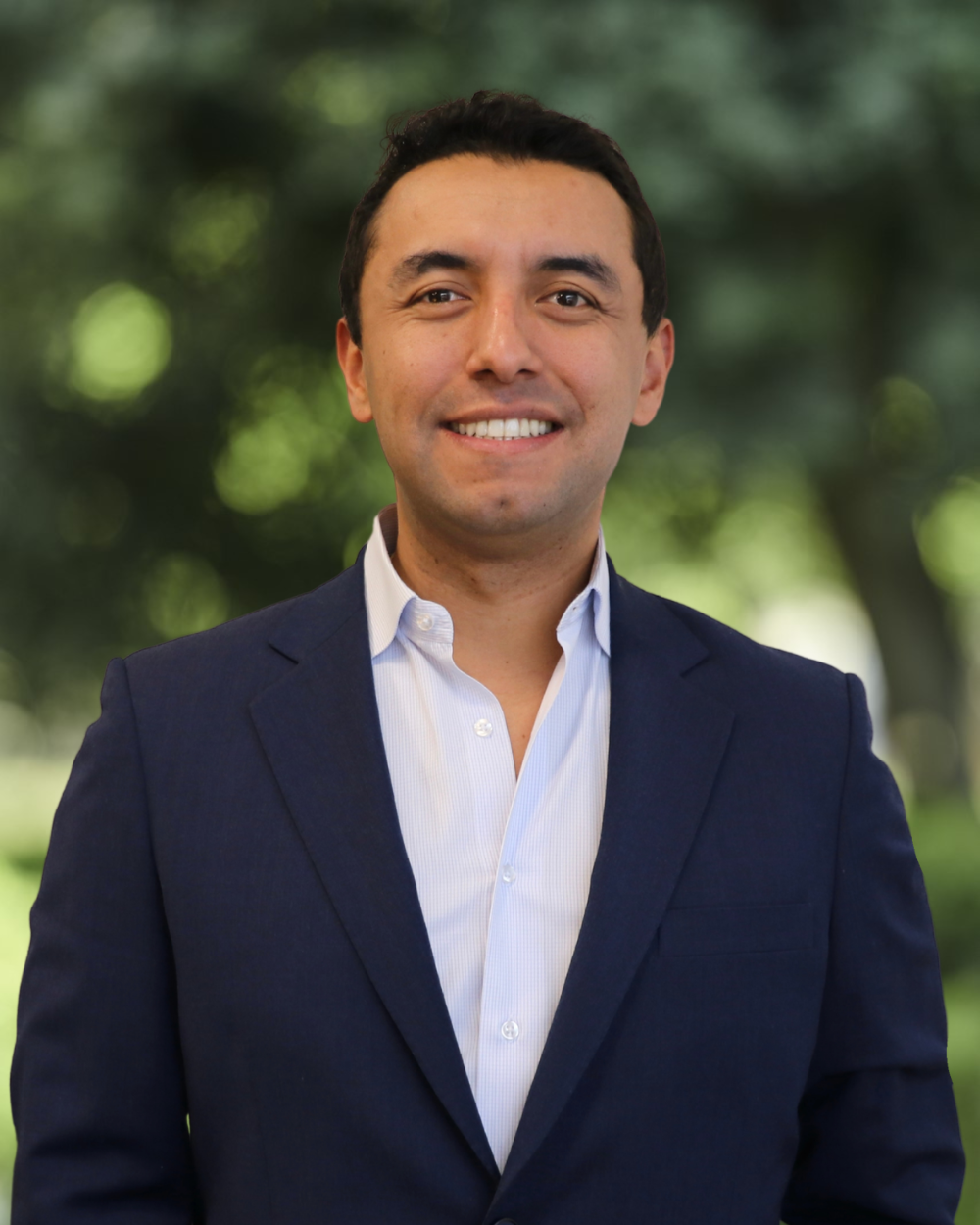
Sebastian Jaimes
Managing Director, McDermott + Bull
sjaimes@mbexec.com
Sebastian Jaimes serves as Managing Director at McDermott + Bull and is based in Houston, where he plays a key role in strengthening the firm’s presence across the central and eastern United States and supporting continued growth of the firm’s platform in Texas. He focuses on expanding long-term client partnerships within the Consumer Brands sector, partnering with private equity firms, portfolio companies, investors, and management teams to place CEOs and C-suite executives across Food and Beverage, Agriculture, Ingredients and Commodities, Consumer Goods, and Retail, with particular depth in Chief Supply Chain, Procurement, and Operations leadership. His work supports organizations navigating growth, transformation, and operational complexity.